
Payment Methods at Australian Online Casinos: What Actually Works in 2026
 Available in AU

The cashier page is where most Australian players lose their patience. Not the pokies. The cashier. You pick a site, you find a game you like, you go to deposit — and your Commonwealth Bank card gets knocked back with a message so vague it could mean anything. Then you try again. Same result.
That decline is not a glitch. It is policy, and it has been hardening every quarter since 2024. Meanwhile the method that most sites now push at the top of their cashier — PayID — did not even feature in Australian casino banking a few years ago. The landscape shifted underneath everybody, and a lot of guides still list options that stopped working years ago.
Payment Methods for Australian Online Casinos: What Works in 2026
Short version: PayID and cryptocurrency carry the bulk of Australian casino traffic now. E-wallets like Skrill and Neteller still work and still matter, particularly if you spread play across several sites. Prepaid vouchers such as Neosurf hold a solid niche for anyone who wants a hard spending ceiling. Cards are mostly dead. POLi is entirely dead.
Three separate forces reshaped this. The Interactive Gambling Amendment (Credit and Other Measures) Bill 2023 banned credit cards for online gambling from 11 June 2024, carving out lotteries and keno. POLi, once the default Australian bank-transfer option at offshore cashiers, shut down permanently in 2022 — any site still advertising it has not updated its cashier in years. And the Big 4 banks went well past the letter of the credit card ban, screening Merchant Category Code 7995 (the code that flags betting and casino gambling) and declining debit transactions too, even though debit cards remain perfectly legal for gambling under federal law.
That last point deserves emphasis because it confuses people constantly. The law banned credit cards. Your bank banned considerably more than that, on its own initiative, as a risk decision. NAB and Westpac screen most aggressively; CommBank and ANZ are marginally more permissive but still decline the majority of casino card authorisations. By mid-2026 Australian players attempting card deposits face roughly a 70% decline rate. Not a great use of an evening.
The New Payments Platform stepped into that gap. NPP has been live since February 2018, settling transfers in under ten seconds, around the clock, weekends included. PayID is the addressing layer sitting on top of it — managed by Australian Payments Plus, which merged BPAY Group, Eftpos Payments Australia and NPP Australia in 2023. Offshore cashiers picked it up seriously across 2023 and 2024, and it is now the dominant AUD deposit rail. No fees, because NPP rules forbid banks from charging for these transfers. No MCC screening, because a PayID transfer is a bank-to-bank payment, not a card authorisation to a gambling merchant.
One wrinkle on the regulatory side worth understanding before you compare anything: there is no such thing as an Australian-licensed online casino. The Interactive Gambling Act 2001 prohibits Australian-based operators from offering online casino games to residents. The ACMA polices the perimeter — blocking non-compliant offshore sites, maintaining a register of licensed interactive wagering providers that covers sports betting only. The IGA targets operators, not players; playing at an offshore casino is not an offence for you. Practically, this means every site you deposit at is licensed somewhere else, typically Curaçao or Malta, and the payment methods are the only genuinely Australian part of the transaction.
| Method | Deposit Speed | Withdrawal Speed | Fees | Minimum | Withdrawals? | Best For |
|---|---|---|---|---|---|---|
| PayID / OSKO | Under 10 seconds | 5 min – 4 hours | Zero | A$10–A$20 | Yes | Almost everyone |
| Bitcoin (BTC) | 10–60 min | 10–60 min | A$1–5 network | ~A$20 | Yes | Large transfers |
| Ethereum (ETH) | 1–5 min | 1–5 min | A$1–8 gas | ~A$30 | Yes | Speed with fiat exit |
| USDT (TRC-20) | Under 1 min | Under 1 min | Under A$1 | ~A$20 | Yes | Fastest overall |
| Litecoin (LTC) | 2–10 min | 2–10 min | Under A$0.10 | ~A$15 | Yes | Cheapest crypto |
| Skrill | Instant | 12–24 hours | Free at casino | A$10–A$30 | Yes | Multi-site players |
| Neteller | Instant | 12–24 hours | Free at casino | A$10–A$30 | Yes | Higher limits |
| MiFinity | Instant | 24–48 hours | 0–2% to bank | A$10 | Yes | Lower fees |
| Payz | Instant | 24–48 hours | Varies by tier | A$10–A$20 | Yes | Backup e-wallet |
| Neosurf | 2–15 min | Not supported | 3.5–15% purchase | A$10 | No | Hard budget caps |
| Paysafecard | Instant – 5 min | Not supported | 3–6% purchase | A$10 | No | Cash deposits |
| Flexepin | 2–15 min | Not supported | Purchase fee applies | A$20 | No | Regional retail |
| Visa / Mastercard | Instant if approved | 3–5 business days | Usually zero | A$10–A$20 | Yes | Little, honestly |
| American Express | Instant if accepted | 3–5 business days | Usually zero | A$10–A$20 | Rarely | Almost nothing |
| Apple Pay / Google Pay | Instant | Not supported | Zero | A$10–A$20 | No | One-tap convenience |
| BPAY | 1–2 business days | 1–2 business days | Zero | A$20+ | Yes | Fallback only |
Which payment methods actually work for Australian casino players in 2026, and which are dead or blocked?
PayID, cryptocurrency, e-wallets like Skrill and Neteller, and prepaid vouchers such as Neosurf all work reliably. Credit cards are banned by federal law since June 2024, and the Big 4 banks block most debit card gambling transactions too. POLi shut down in 2022 and no longer exists.
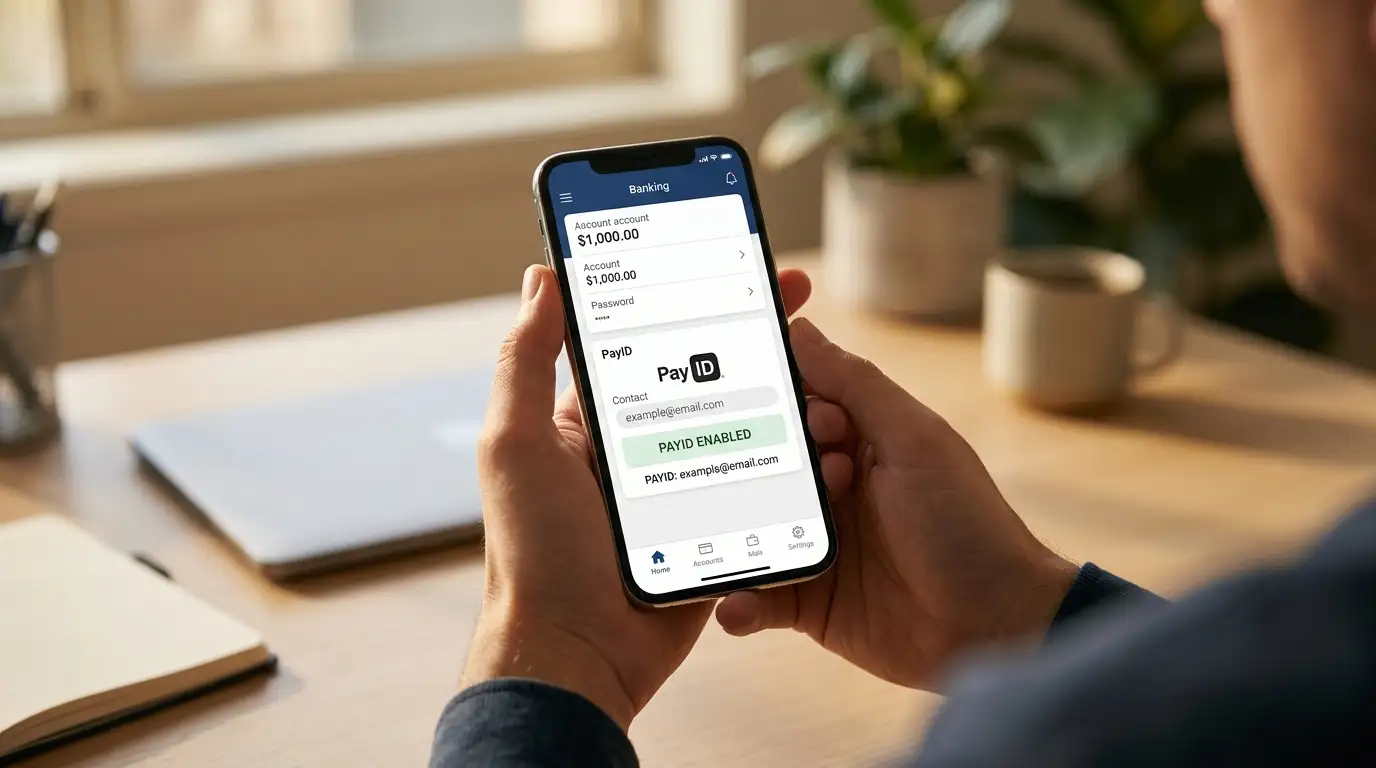
PayID & Instant Bank Transfers (OSKO)
PayID is what POLi should have been, except it is not a third-party service bolted onto your banking login. It is native infrastructure, baked into the New Payments Platform, and every Australian bank with NPP access participates — which is all of them at this point. You link an identifier (mobile number, email, or ABN) to your BSB and account number once, in your banking app. From then on, payments route by that identifier instead of typing out digits.
Offshore casino cashiers adopted PayID at speed in 2023 and 2024 when card blocks intensified. Zero transaction fees under NPP rules. Settlement in under ten seconds. No gambling MCC to screen, because the transfer runs bank-to-bank on the same rails you use for splitting a restaurant bill. Most casinos now list PayID first in their deposit menu because it works, and it works reliably.
How PayID Works for Casino Deposits
You open the casino cashier, select PayID, copy their PayID (often a mobile number or email address), and fire up your banking app to send the amount. The Confirmation of Payee feature shows you the recipient name before you approve, so you can verify you are not sending funds to the wrong entity. The casino also provides a reference code. You paste that into the description field. If you forget it, the deposit still lands, but it goes into a holding pool and takes 24 to 72 hours and a support ticket to retrieve. With the reference code, the funds credit your casino balance within seconds.
Daily limits sit at A$1,000 to A$10,000 depending on your bank, adjustable in your app. Transaction accounts work. Some savings accounts are excluded from NPP by individual banks — CommBank, NAB, and Westpac have slightly different policies on this, so check your account type if a transfer fails. OSKO is the payment service underneath, not a separate method. When you send a PayID payment, you are using OSKO whether the interface shows that word or not.
PayID Withdrawal Speed & Availability
PayID withdrawals exist at a smaller number of casinos than PayID deposits, but adoption is growing. Where offered, processing time runs from five minutes to four hours depending on the operator, its verification backlog, and whether you have a VIP tag. Once the casino releases the payment, NPP settles it instantly — under ten seconds back to your account. Total time, door to door: typically same-day, often within an hour if the casino is moving.
Some offshore operators still route AUD withdrawals through traditional bank transfer rails (2 to 5 business days) even when they accept PayID deposits. That asymmetry is worth checking before you fund. A casino advertising PayID on the deposit page does not automatically mean PayID on the way out.
PayID Fees, Limits & Bank Requirements
Zero transaction fees. NPP rules prohibit banks from charging for PayID transfers, and casinos do not layer fees on top. Minimum deposits sit at A$10 to A$20 across most cashiers. Upper limit per transaction is set by your bank, not the casino — commonly A$1,000 to A$10,000 daily, though you can raise it via your banking app if you need.
A transaction account is safer than a savings account. NAB, CommBank, Westpac and ANZ all participate, but policies on savings account NPP access vary slightly. If you try a PayID transfer from a savings account and it bounces, switch to your transaction account. The reference code the casino provides is not optional — treat it as mandatory or you are volunteering for a 48-hour support delay while they reconcile your deposit manually.
Which Banks Support PayID for Casinos
All NPP member banks support PayID as a payment method. That includes the Big 4 (CommBank, NAB, Westpac, ANZ), the challengers (ING, Up, Macquarie, Bank of Queensland, Bendigo), and most regional credit unions. None of them block PayID for casino transactions the way they block cards. Occasional fraud-alert holds happen — Suncorp and Macquarie have been named in reports of temporary holds on high-frequency PayID casino transfers — but those are resolved by calling the bank, not permanent policy blocks.
The reason PayID escapes the MCC screening that kills cards is simple: it is a bank-to-bank transfer, not a card authorisation to a merchant with a gambling code. The bank never sees MCC 7995. It sees an NPP payment to another Australian bank account. That difference is why PayID became the workhorse AUD rail while cards collapsed.
Is PayID safe for casino transactions?
PayID runs on the New Payments Platform, which is bank-backed infrastructure overseen by the Reserve Bank of Australia. Confirmation of Payee shows the recipient name before you send, reducing misdirected payments. The casino never sees your BSB or account number, only the PayID identifier. NPP uses ISO 20022 messaging, the global interbank standard. As safe as any other bank transfer.

Cryptocurrency Payments: Bitcoin, Ethereum & Stablecoins
Cryptocurrency pulls two crowds at offshore casinos: players who want the fastest withdrawals available, and players who want their bank to see nothing. Both goals are legitimate, and crypto delivers on both. A Bitcoin withdrawal clears in 10 to 60 minutes depending on network congestion and the number of confirmations the casino waits for. An Ethereum transfer settles in 1 to 5 minutes. Tether on the Tron network (USDT-TRC20) clears in under a minute and costs under a dollar in network fees.
That speed advantage over every other withdrawal method is not small. PayID might return funds same-day if the casino processes quickly. E-wallets take 12 to 24 hours. Cards take 3 to 5 business days. Crypto is out the door before you close the cashier tab. The privacy angle is equally stark: your bank sees a purchase at CoinSpot or Swyftx, not a casino transaction. The offshore operator never touches Australian banking rails.
Australian players buy crypto through AUSTRAC-registered exchanges. AUSTRAC is the Australian Transaction Reports and Analysis Centre, the financial intelligence unit that enforces anti-money laundering obligations. Every exchange operating in Australia must register under the AML/CTF Act 2006. The major ones — CoinSpot, Swyftx, Independent Reserve, Binance Australia — all carry AUSTRAC registration. Fiat-to-crypto conversions above A$10,000 are reportable events, which is standard financial surveillance, not a ban. Under that threshold, you are invisible unless you generate enough volume to trigger other flags.
Bitcoin (BTC) for Casino Transactions
Bitcoin is the oldest and most universally accepted cryptocurrency at offshore casinos. Launched in 2009, it remains the benchmark. Deposits take 10 to 60 minutes for one to three blockchain confirmations. Withdrawals run the same. Network fees fluctuate with congestion — typically A$1 to A$5, occasionally spiking higher when the mempool is jammed. Minimum deposits sit around A$20 equivalent at most casinos.
Bitcoin withdrawals bypass every layer of Australian banking friction. No card declines. No PayID daily limits. No waiting on e-wallet processing windows. The operator releases the transaction to the blockchain, miners confirm it, and the BTC lands in your wallet. Total time under an hour if the network is moving. You then sell it on your Australian exchange for AUD, which hits your bank account in 1 to 2 business days. Door to door: faster than any fiat withdrawal method.
The volatility issue is real but overstated for gambling timescales. If you deposit 0.01 BTC and withdraw 0.015 BTC two hours later, price movement in that window is noise. Where volatility bites is holding large balances in BTC at the casino or leaving winnings in your wallet for weeks. If that bothers you, stablecoins exist for exactly that reason.
Ethereum (ETH) & ERC-20 Tokens
Ethereum settles faster than Bitcoin — 1 to 5 minutes typically, depending on gas prices and the casino’s confirmation policy. Network fees (called gas) vary with demand on the Ethereum blockchain, commonly A$1 to A$8. Minimum deposits run around A$30 equivalent. Ethereum is widely accepted at crypto casinos but not quite as universal as Bitcoin.
The main reason to pick Ethereum over Bitcoin is speed. One to five minutes beats 10 to 60. The secondary reason is access to ERC-20 tokens, which include Tether (USDT), USD Coin (USDC), and various other stablecoins and altcoins that run on the Ethereum blockchain. If a casino accepts “ETH and ERC-20 tokens,” you can deposit USDT on the Ethereum network through that same cashier option.
Gas fees are the downside. When the Ethereum network is congested, gas spikes. A withdrawal that cost A$2 last week might cost A$12 this week. Bitcoin fees fluctuate too, but Ethereum gas is more volatile. For small transactions under A$100, a A$8 gas fee is a noticeable drag.
USDT Stablecoins: TRC-20 vs ERC-20
Tether (USDT) is a stablecoin pegged to the US dollar, issued by Tether Limited in Hong Kong. One USDT is meant to equal one USD. The peg wobbles occasionally but holds within cents. For Australian players, the stablecoin benefit is eliminating price-movement risk between deposit and withdrawal. You deposit A$200 worth of USDT, you play, you withdraw A$250 worth of USDT. No volatility.
USDT runs on multiple blockchains. The two that matter for Australian casino banking are ERC-20 (Ethereum) and TRC-20 (Tron). ERC-20 USDT transactions cost A$1 to A$6 in gas and settle in 1 to 5 minutes. TRC-20 USDT transactions cost under A$1 in fees and settle in under a minute. TRC-20 became the preferred choice for Australian players across 2025 and 2026 because it is faster and cheaper.
The network selection is critical, and mistakes are permanent. ERC-20 addresses start with 0x. TRC-20 addresses start with T. If you send ERC-20 USDT to a TRC-20 address, or vice versa, the funds are lost. The blockchain does not reverse this. The casino cannot reverse it. Check the network twice before you send.
Litecoin (LTC) & Other Altcoins
Litecoin is the budget option in the crypto menu. Launched in 2011 as a faster, cheaper alternative to Bitcoin, it delivers on that promise. Network fees under A$0.10. Settlement in 2 to 10 minutes. Minimum deposits around A$15. Litecoin is widely accepted but not quite as universal as Bitcoin or Ethereum.
Solana (SOL) gained traction in the casino space during 2026, valued for sub-second settlement and negligible fees. Adoption is narrower than BTC, ETH, or USDT, but growing. Bitcoin Cash (BCH) holds a niche as well, offering faster and cheaper transactions than Bitcoin itself. Most Australian crypto players stick with BTC for universality, USDT-TRC20 for speed, or LTC when they want cheap transfers.
How to Buy Crypto in Australia (AUSTRAC Exchanges)
You need an AUSTRAC-registered exchange. The big four are CoinSpot, Swyftx, Independent Reserve, and Binance Australia. Sign up, verify your identity (photo ID and a selfie, sometimes a utility bill), link your bank account or card, and buy. CoinSpot and Swyftx are the most beginner-friendly; Independent Reserve skews toward serious traders. Binance Australia is Binance’s local entity, separate from the global exchange.
Purchase process: deposit AUD via bank transfer or card (some exchanges charge a card fee, bank transfer is usually free), then swap AUD for the crypto you want. Fees vary by exchange and payment method — typically 0.5% to 1% trading fee. Withdrawal to your personal wallet (not leaving it on the exchange) costs the network fee for that blockchain.
AUSTRAC’s A$10,000 reporting threshold applies to fiat conversions, not to transfers between your exchange account and your wallet. Buying A$9,000 of Bitcoin in one transaction is a reportable event. Buying A$2,000 five times is not, unless the exchange decides your pattern looks structured to avoid reporting. Play it straight: if you need to move large amounts, the reporting is automatic and causes you no hassle unless you are laundering.
Crypto Tax Implications for Australian Players
Casino winnings are not taxable in Australia if you are a recreational gambler. This is true regardless of payment method. However, cryptocurrency disposal events — selling BTC for AUD, or swapping BTC for ETH — can trigger capital gains tax depending on how long you held the crypto and whether the ATO considers you an investor or a trader.
The cleanest scenario: you buy USDT-TRC20, deposit it at the casino within hours, play, withdraw your winnings in USDT-TRC20 within hours, and sell it back to AUD on the exchange. Minimal holding period, minimal price movement, minimal CGT exposure. The murkiest scenario: you bought Bitcoin in 2022, it appreciated 200%, you deposit it in 2026, you win, you withdraw more Bitcoin than you deposited, and you hold it for months before selling. The ATO sees that disposal and wants to know your cost basis.
The safe rule: keep records of every fiat-to-crypto and crypto-to-fiat conversion. If you win at a casino and cash out crypto, the winnings themselves are not taxed, but the act of converting them to AUD may be. Recreational players usually have de minimis exposure because holding periods are short. If you trade frequently or hold large balances, talk to an accountant.
Do I have to pay tax on casino winnings if I use cryptocurrency?
Casino winnings are tax-free for recreational gamblers in Australia, regardless of whether you use crypto or fiat. However, disposing of cryptocurrency — selling it for AUD or swapping it for another coin — can trigger capital gains tax depending on your holding period and whether the ATO considers you an investor. Winnings themselves: not taxed. Crypto conversions: potentially taxed.

E-Wallets: Skrill, Neteller, MiFinity & More
E-wallets sit between your bank and the casino. You load the wallet from your card or bank account, then use the wallet balance to deposit at casinos. The operator sees only your e-wallet account, not your bank details. Withdrawals from the casino return to your e-wallet, then you transfer from the wallet back to your Australian bank. Two hops instead of one, but the intermediary layer delivers real benefits: faster processing than cards, better acceptance than PayID at some offshore sites, and consolidated balance tracking if you play at multiple casinos.
The Australian e-wallet landscape is dominated by three brands: Skrill, Neteller, and MiFinity. All three are FCA-regulated in the United Kingdom. All three support AUD currency. All three process deposits instantly and handle withdrawals in 12 to 48 hours depending on the operator. Skrill and Neteller are sister services under Paysafe Limited and have near-identical fee structures. MiFinity is newer (founded 2018), growing fast, and charges lower fees.
Skrill for Australian Casino Players
Skrill has been operating since 2001, originally under the name Moneybookers. It is FCA-regulated, supports over 40 currencies including AUD, and claims 40 million users globally. At offshore casinos serving Australians, Skrill is the most widely accepted e-wallet — more operators support it than MiFinity, Payz, or any of the niche alternatives.
Deposits to casinos are instant. Minimum deposit limits sit at A$10 to A$30 depending on the operator. Casino-to-Skrill withdrawals process in 12 to 24 hours typically, sometimes faster at VIP tiers. Fees at the casino are usually zero — the operator does not charge you for using Skrill. The fee appears when you withdraw from your Skrill wallet to your Australian bank account: 1% to 3% depending on the amount, plus a small fixed charge. That fee is avoidable if you spend the Skrill balance using the Net+ prepaid Mastercard instead of cashing out, but most players want AUD in their bank, not a prepaid card.
Two-factor authentication is standard. KYC happens at the Skrill level — you verify your identity once with Skrill, not separately at every casino. The main appeal over PayID is consolidation: if you play at five different offshore sites, you can pool balances in one Skrill wallet and withdraw to your bank in a single transfer, paying the fee once instead of five times. The main downside over PayID is that fee: PayID is free, Skrill charges up to 3% to exit.
Skrill runs a VIP programme that reduces fees for high-volume users. Unless you move tens of thousands monthly, you are paying the standard rate. For most Australian players, Skrill makes sense if the casino does not offer PayID withdrawals or if you value the intermediary-layer privacy enough to tolerate the exit fee.
Neteller: Features & Withdrawal Times
Neteller is Skrill’s sister brand under Paysafe Limited, launched in 1999 and targeting online gamblers from the start. Functionally, it is almost identical to Skrill. Instant deposits, 12 to 24-hour withdrawals from casinos, 1% to 3% fee to transfer from Neteller to your Australian bank, Net+ prepaid Mastercard available. FCA-regulated. AUD support. Two-factor authentication. KYC at wallet level.
The difference is positioning. Neteller offers higher transaction limits than Skrill, appealing to high-rollers. It also runs a loyalty programme (Neteller Rewards) that provides cashback on fees for active users. If you are moving A$50 deposits, Skrill and Neteller are interchangeable. If you are moving A$5,000 deposits, Neteller’s higher limits and rewards structure might tip the balance.
Most players pick one or the other and stick with it. There is no benefit to holding both unless you encounter a casino that accepts Neteller but not Skrill, which is rare. Offshore operators almost always support both or neither.
MiFinity: Lower Fees & Multi-Currency Wallets
MiFinity launched in 2018, making it the youngest of the three major e-wallets in the Australian casino space. It is FCA-regulated, based in the UK, and deliberately positioned as a lower-fee alternative to Skrill and Neteller. Deposits to casinos are instant. Withdrawals from casinos to MiFinity take 24 to 48 hours. Fees for cashing out to your Australian bank run 0% to 2% depending on the amount and your account tier — cheaper than Skrill’s 1% to 3%.
MiFinity supports up to nine simultaneous currency wallets in one account, which matters if you play at international casinos in multiple currencies. It also integrates crypto: you can hold Bitcoin and Ethereum within your MiFinity wallet alongside AUD, EUR, and USD. That integration is convenient but not a reason to pick MiFinity over a dedicated crypto wallet if crypto is your primary method.
Adoption grew significantly across 2024 and 2026. MiFinity is not yet as universally accepted as Skrill or Neteller, but the gap is closing. Verification is reportedly faster than Skrill — multiple Australian players in forums cite 24-hour turnaround for KYC approval, compared to 48 to 72 hours at Skrill. If the casino supports MiFinity and you are opening a new e-wallet account, the lower fees and faster verification make it the smarter pick.
Other E-Wallets (Payz, eZeeWallet, Jeton, MuchBetter)
Payz (formerly ecoPayz) is the fourth-place e-wallet at offshore casinos serving Australians. FCA-regulated, instant deposits, 24 to 48-hour withdrawals. Fees similar to Skrill. It rebranded from ecoPayz in 2022; functionality did not change. Payz is a solid fallback if a casino does not support the big three, but there is no reason to pick it first.
eZeeWallet, Jeton, MuchBetter, STICPAY, and AstroPay occupy narrower niches. eZeeWallet is accepted at a handful of casinos and charges very low fees, but adoption is limited. Jeton has better European coverage than Australian. MuchBetter skews toward mobile users with a phone-first interface. STICPAY and AstroPay appear at some Asian-facing operators. None of them rival Skrill, Neteller, or MiFinity for Australian players in 2026.
What are the fees for depositing and withdrawing at Australian online casinos?
Most casinos charge zero fees for deposits and withdrawals regardless of method. The fees appear at the payment provider level. PayID and crypto (on low-fee networks like TRC-20 or Litecoin) cost under A$1. E-wallets charge 0% to 3% to transfer from the wallet to your bank. Prepaid vouchers charge 3.5% to 15% at purchase. Cards (where still accepted) are usually fee-free at the casino but may incur bank charges.
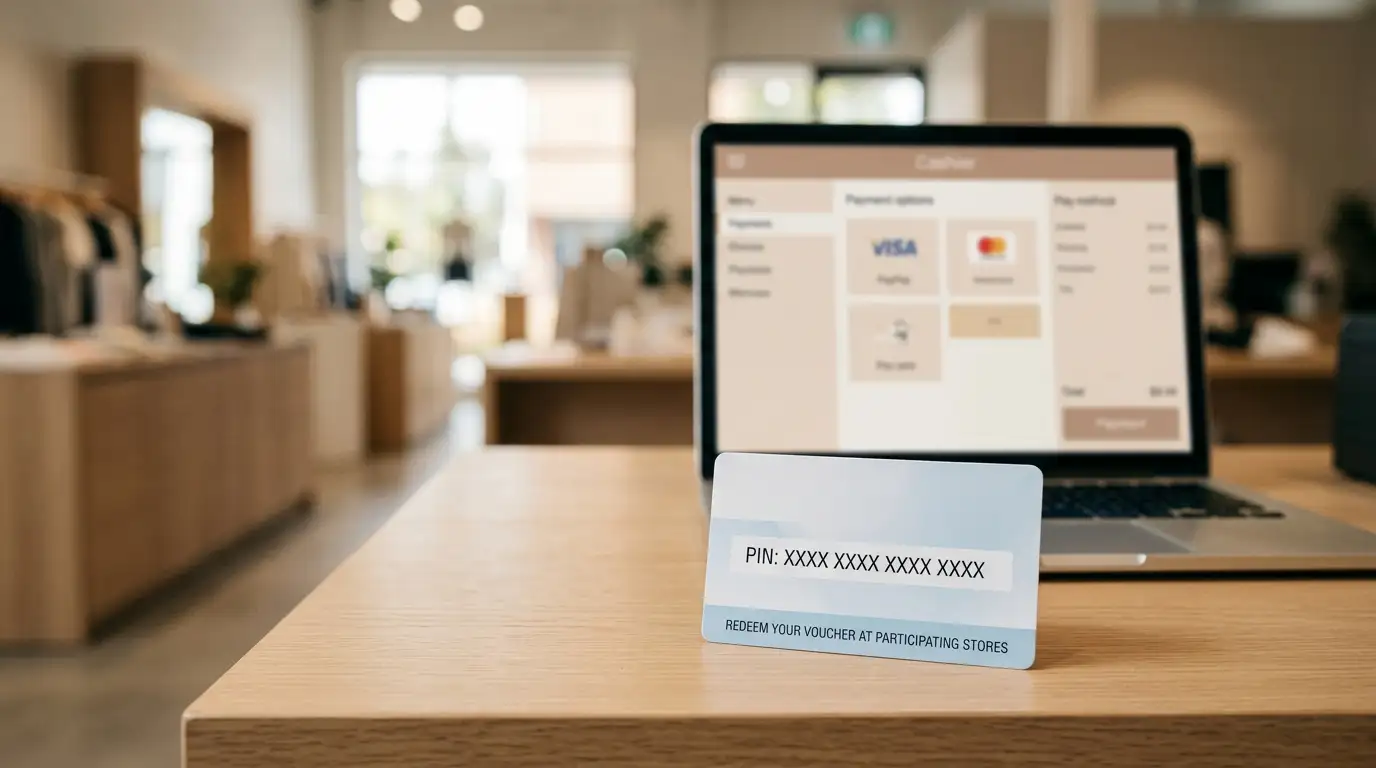
Prepaid Vouchers: Neosurf, Paysafecard & Alternatives
Prepaid vouchers are the casino equivalent of buying a gift card with cash. You walk into a Coles, pay A$50 at the register, receive a 10-digit PIN, and redeem it at the casino cashier. Your bank statement shows a Coles transaction, not a gambling deposit. The casino never receives your bank details or card number. And you cannot deposit more than the voucher value — if you loaded A$50, you can spend A$50, and not a dollar beyond that.
That last point is why vouchers hold a niche despite costing more than every other method. A PayID transfer is free, but it is also a soft limit: you set a daily cap in your banking app, and when your judgement fails at 2 a.m., you can raise that cap in four taps and keep depositing. A voucher is a hard limit. When it is gone, it is gone. You have to get dressed, drive to a shop, and buy another one. That friction is a feature, not a bug.
The trade-off is the purchase fee and the deposit-only limitation. Vouchers do not support withdrawals. If you deposit using Neosurf, you must withdraw via PayID, crypto, e-wallet, card, or bank transfer. That means setting up a second method and navigating its KYC process, which adds a day or two to your first cashout.
Neosurf: Where to Buy & How to Use
Neosurf is operated by Neosurf Cards SAS, a French payment institution regulated by ACPR (Autorité de contrôle prudentiel et de résolution). In Australia, it has the widest retail distribution of any prepaid voucher: Coles supermarkets nationwide, 7-Eleven at selected stores, Australia Post at major branches, and independent newsagents in most suburbs.
Face values run from A$10 to A$500. Purchase fees are scaled: small denominations carry high percentage fees (a A$10 voucher costs roughly A$11.50, or 15%), while larger denominations drop closer to 3.5% (a A$100 voucher costs around A$103.50). The retailer sets the exact fee, so there is minor variation. After 12 months, dormancy fees kick in and erode the remaining balance. Use it or lose it.
You redeem the voucher by entering the 10-digit PIN at the casino cashier. Deposit speed is 2 to 15 minutes depending on how fast the casino’s payment processor validates the code. Partial redemption is supported: if your voucher holds A$100 and you deposit A$40, you retain A$60 on the PIN for future use. Some systems require a MyNeosurf account to track partial balances; others handle it automatically.
The anonymity angle is real but not absolute. The purchase is anonymous (cash at Coles), but the casino still requires KYC when you withdraw. You are not evading identification; you are avoiding bank-side gambling MCC exposure. For players who worry about their bank seeing A$200 to “CasinoBrandName Limited, Curaçao” every week, Neosurf solves that. For players who want true anonymity end-to-end, crypto is the only option.
Paysafecard for Casino Deposits
Paysafecard is operated by Paysafe Group, the same parent that owns Skrill and Neteller, and is regulated by the FCA in the United Kingdom. It has been around since 2000, giving it broader international recognition than Neosurf. Australian retail distribution is similar: convenience stores, petrol stations, some supermarkets, though not as ubiquitous as Neosurf’s Coles presence.
Face values run A$10 to A$200. Purchase fees are 3% to 6% typically, lower than Neosurf at equivalent denominations. The 16-digit PIN works the same way: redeem at the casino cashier, deposit processes instantly to 5 minutes, partial redemption supported. A MyPaysafe account is optional but recommended for tracking balances across multiple PINs.
Paysafecard’s strength is international acceptance. If you play at casinos licensed in multiple jurisdictions or travel, Paysafecard is more likely to appear in a European or Asian cashier than Neosurf. For Australia-focused play, Neosurf’s wider retail network and Coles exclusivity make it the easier pick. For international flexibility, Paysafecard wins.
Flexepin & CashtoCode
Flexepin is operated by Novatti Group, an Australian company listed on the ASX under ticker NOV. That local ownership gives it slightly better coverage in regional Australia compared to Neosurf, but the gap is small. Denominations run A$20 to A$500. Purchase fees apply, though the exact structure varies by retailer. Flexepin adoption at offshore casinos is narrower than Neosurf or Paysafecard, but it exists.
CashtoCode is operated by Bayzat Payment Services in Malta and has stronger penetration in European markets than Australia. Retail availability in Australia is patchy. Unless a specific casino you want to use accepts CashtoCode but not Neosurf or Paysafecard, there is little reason to hunt for it.
Voucher Fees & Purchase Locations in Australia
Neosurf: Coles nationwide, 7-Eleven selected stores, Australia Post major branches, independent newsagents. Fees 3.5% to 15% depending on denomination. Paysafecard: convenience stores, petrol stations, some supermarkets. Fees 3% to 6%. Flexepin: regional newsagents and convenience stores. Fees vary by retailer.
The purchase fee is unavoidable, and it makes vouchers the most expensive deposit method after you account for the cost. PayID is free. Crypto on a cheap network like TRC-20 or Litecoin costs under a dollar. E-wallets charge 0% to 3% on the way out, but 0% on the way in. Vouchers charge 3.5% to 15% upfront. That expense buys you two things: a hard spending cap and no gambling transactions visible to your bank. Whether those two things are worth 3.5% to 15% is a decision only you can make.

Credit & Debit Cards: What Still Works
The short answer is: not much. The long answer involves federal law, bank policy, and the gap between the two.
Federal law banned credit cards for online gambling via the Interactive Gambling Amendment (Credit and Other Measures) Bill 2023, effective 11 June 2024. Lotteries and keno were carved out; casino games, pokies, and sports betting were not. That ban applies to all gambling operators serving Australians, including offshore casinos. Credit cards for online casino deposits are illegal, full stop.
Debit cards remain legal under federal law. The problem is that the Big 4 banks — CommBank, NAB, Westpac, ANZ — went well beyond the legal requirement and implemented their own screening of Merchant Category Code 7995, the international code identifying betting and casino gambling transactions. When a casino payment processor sends a card authorisation with MCC 7995 attached, these banks decline it automatically, regardless of whether the card is credit or debit.
That screening policy is not law. It is a risk decision made by each bank. And it is not uniform: NAB and Westpac screen the most aggressively, declining nearly all casino card transactions. CommBank and ANZ are marginally more permissive but still block the majority. Challenger banks like ING, Up, Macquarie, Bank of Queensland, and Bendigo Bank have been reported as less aggressive, but policies shift quarterly, and what worked in March might not work in September.
By mid-2026, Australian players attempting to deposit at offshore casinos using Visa or Mastercard debit cards face roughly a 70% decline rate. That number comes from player reports aggregated across forums, not from official bank statements, but it matches observed behaviour. Seven out of ten attempts fail. The third might succeed, or it might succeed today and fail tomorrow when the bank tightens its filter.
The 2024 Credit Card Ban Explained
The Interactive Gambling Amendment (Credit and Other Measures) Bill 2023 passed into law and took effect on 11 June 2024. It prohibits the use of credit cards for most forms of online gambling. The government’s rationale was harm minimisation: preventing people from gambling with borrowed money. The exclusion for lotteries and keno reflects lobbying, not logic.
The ban applies to operators, not players. An offshore casino accepting credit cards from Australians after 11 June 2024 is violating Australian law, even if it is licensed in Curaçao or Malta. Most reputable operators removed credit card options from their Australian cashiers by mid-2024. Sites still advertising credit cards either have stale cashiers or are ignoring compliance.
Debit cards were explicitly left legal. That distinction matters because the subsequent bank-side blocking is bank policy, not federal law. If your debit card gets declined at a casino, your bank blocked it, not the government.
Which Banks Block Casino Card Payments
NAB and Westpac are the most aggressive. They screen MCC 7995 for both credit and debit cards and decline nearly every casino transaction. CommBank and ANZ are slightly less strict, allowing a higher success rate (still well under 50%), but the trend across 2025 and 2026 has been tightening, not loosening.
Challenger banks present a mixed picture. ING and Up Bank have been named in player reports as more permissive, with debit card casino transactions succeeding at higher rates than the Big 4. Macquarie, Bank of Queensland, and Bendigo Bank sit somewhere in between. Suncorp has been reported as permissive by some players and restrictive by others, suggesting inconsistent filtering or region-based differences.
None of this is documented in public bank policy. Banks do not publish gambling MCC blocking details. What we know comes from aggregated player experience, which is anecdotal but consistent: Big 4 blocks most, challengers block less, all of it subject to change without notice.
If you want to test whether your debit card works, try a small deposit. If it succeeds, that tells you it works today. It does not tell you it will work next week. Treat cards as unreliable.
Visa & Mastercard: Current Status
Visa and Mastercard are networks, not issuers. Whether your card works depends entirely on the bank that issued it. Visa issued by NAB is blocked. Visa issued by ING might work. The network itself does not care.
American Express is a special case because Amex is both the network and the issuer for most Amex cards in Australia. Acceptance at offshore casinos is extremely limited regardless of blocking, because Amex charges higher merchant fees than Visa or Mastercard, and many payment processors do not support it. Even before the 2024 ban and the subsequent bank blocks, Amex was a niche option. Now it is nearly irrelevant.
Deposit speed, when a card does work, is instant. Withdrawal speed is 3 to 5 business days — significantly slower than PayID (same-day), crypto (under 2 hours), or e-wallets (12 to 24 hours). That lag exists because card withdrawals route through the card network’s settlement process, not because casinos deliberately slow them down.
American Express at Australian Casinos
Amex acceptance at offshore casinos serving Australians is low and falling. High merchant fees (typically 2% to 3.5%, compared to 1% to 2% for Visa and Mastercard) make it unattractive for payment processors. The few casinos that do accept Amex often pass the fee to the player as a surcharge.
Amex is subject to the same June 2024 credit card ban as Visa and Mastercard. Amex-issued credit cards cannot be used for online gambling. Amex-issued charge cards (which technically are not credit cards under some definitions but function identically) also fall under the ban in practice. Even if a casino accepts Amex and your bank allows the transaction, minimum deposits are typically A$20 to A$50, higher than other methods.
Unless you have a specific reason to use Amex — points, rewards, or a cashier that accepts nothing else — ignore it. PayID, crypto, and e-wallets are faster, cheaper, and more reliable.
Are credit cards still allowed for online casino deposits in Australia?
No. The Interactive Gambling Amendment (Credit and Other Measures) Bill 2023 banned credit cards for online gambling from 11 June 2024. Debit cards remain legal under federal law, but the Big 4 banks block most debit card gambling transactions using MCC 7995 screening. Cards are no longer a reliable deposit method for Australian casino players.
Why did my bank decline my casino deposit?
If you used a credit card, it is banned by federal law since June 2024. If you used a debit card, your bank likely screens Merchant Category Code 7995 (gambling) and blocks the transaction as policy, even though debit cards remain legal. NAB and Westpac block most aggressively; CommBank and ANZ are slightly more permissive. Challenger banks like ING or Up may allow the transaction. Try PayID or crypto instead.
Mobile Wallets & Other Options
Mobile wallets — Apple Pay and Google Pay — deliver one-tap convenience at retail, with 99.4% merchant acceptance across Australia as of 2026. At offshore casino cashiers, that acceptance rate drops below 30%. Tokenization and bank-side MCC screening create friction that many payment processors have not solved, and those that have do not consider it a priority.
Apple Pay & Google Pay for Casino Deposits
Apple Pay (for iPhone users) and Google Pay (for Android users) work by tokenizing your card details. When you add a card to Apple Pay, Apple generates a device-specific token that replaces your actual card number in transactions. Google Pay does the same. The merchant never sees your card number, only the token. That tokenization adds security at retail but creates compatibility challenges at offshore casinos, where payment processors are not always set up to handle tokenized transactions.
Deposits, where supported, are instant. Minimum deposits sit at A$10 to A$20. Fees are zero at the casino level. The problem is twofold: first, limited acceptance — most offshore cashiers do not list Apple Pay or Google Pay as options. Second, even when they do, the transaction is subject to the same bank-side MCC 7995 blocks that kill regular card payments. If your CommBank debit card is blocked for casino transactions, Apple Pay linked to that same CommBank card is also blocked. The tokenization does not bypass MCC screening.
Mobile wallets are deposit-only at casinos. You cannot withdraw to Apple Pay or Google Pay. That limitation is not unique to gambling; it is inherent to how these services work. They are payment facilitators, not bank accounts. Withdrawals require a second method — PayID, crypto, e-wallet, or bank transfer.
For Australian players, mobile wallets are a marginal convenience at best. If the casino supports them and your bank allows the underlying card, one-tap deposit is nice. But the 70% decline rate that plagues cards applies here too, and the deposit-only limitation means you are setting up a second method for cashouts anyway. PayID is faster to set up, works more reliably, supports withdrawals, and costs nothing.
BPAY: The Slow Backup Option
BPAY is a bill payment system operated by Australian Payments Plus (the same entity that manages PayID). It launched in 1997, long before the New Payments Platform, and Australians know it from paying utility bills and council rates. Some offshore casinos accept BPAY for deposits and withdrawals, though it has largely been displaced by PayID since 2023.
Processing time is 1 to 2 business days in both directions. That lag makes BPAY impractical for real-time play. You deposit on Monday, the funds arrive Wednesday. You request a withdrawal on Thursday, it hits your account the following Monday or Tuesday. Zero fees, which is the lone advantage over e-wallets. Minimum deposits sit at A$20 or higher.
BPAY transfers are initiated through your online banking or phone banking by entering a biller code and reference number, the same way you pay an electricity bill. The casino provides both. The interface is familiar to any Australian who has paid a bill in the last 20 years, which is BPAY’s main appeal. But familiarity does not overcome a 2-day settlement window when PayID settles in 10 seconds.
BPAY makes sense in exactly one scenario: the casino does not offer PayID withdrawals, you do not want to use crypto or an e-wallet, and you are willing to wait. That scenario is increasingly rare. Most offshore operators that serve the Australian market now offer PayID, because offering BPAY and not PayID in 2026 signals a stale cashier.
What is the fastest payment method at Australian online casinos?
USDT on the Tron network (TRC-20) is the fastest deposit and withdrawal method, settling in under a minute with sub-A$1 fees. PayID deposits are instant (under 10 seconds); PayID withdrawals take 5 minutes to 4 hours depending on casino processing speed. Crypto on faster blockchains (ETH, LTC) settles in 1 to 10 minutes. E-wallets take 12 to 48 hours for withdrawals.
Deposit Limits & Minimum Amounts by Method
Minimum deposit limits gate access more than maximum limits for most Australian players. A casino advertising a A$10 minimum sounds accessible until you discover that PayID, cards, and e-wallets support A$10, but crypto requires A$20 to A$30 due to network fees eating into smaller deposits. Vouchers start at A$10 denominations but carry 15% purchase fees at that tier, pushing the effective cost to A$11.50. A player with A$10 to spend does not have equal access across all payment methods.
PayID sits at A$10 to A$20 minimums across most cashiers. Crypto minimums are A$15 to A$30 depending on the coin and the casino’s policy. E-wallets (Skrill, Neteller, MiFinity) run A$10 to A$30. Prepaid vouchers start at A$10 face value, but after purchase fees, you are paying A$11.50 to A$12. Cards, where still accepted, start at A$10 to A$20. BPAY starts at A$20 or higher.
A$1 deposits are effectively dead. A handful of crypto casinos claim to accept them, but network fees make it pointless: sending A$1 of Bitcoin costs A$1 to A$5 in fees. A$5 deposits are rare but possible at some casinos via PayID or select e-wallets like MiFinity and eZeeWallet. The A$10 tier is the de facto standard, supported by nearly every method and nearly every casino. A$20 is the threshold where everything works without friction.
| Minimum Amount | Methods Supporting This Tier | Notes |
|---|---|---|
| A$1 | Technically some crypto casinos | Network fees make it uneconomical |
| A$5 | PayID (select casinos), MiFinity, eZeeWallet | Rare; most set A$10 floor |
| A$10 | PayID, most e-wallets, Neosurf, Paysafecard, cards (where accepted) | De facto standard |
| A$20 | Crypto (BTC, ETH, USDT), BPAY, Flexepin, higher-tier e-wallets | Crypto minimums driven by network fees |
| A$30+ | Some crypto casinos, Neteller VIP tiers | High-roller or specific operator policies |
Maximum deposit limits are set by your payment provider, not the casino. PayID caps at your bank’s daily limit (typically A$1,000 to A$10,000, adjustable in your app). Crypto limits are functionally unlimited — you are constrained by network fees on very large transactions, not by policy caps. E-wallets cap at A$5,000 to A$10,000 per transaction depending on your verification tier. Vouchers cap at the face value you purchased (A$10 to A$500). BPAY supports A$10,000+ per transaction but remains impractically slow.
What is the minimum deposit at Australian online casinos?
A$10 is the standard minimum across most payment methods and casinos. PayID, e-wallets like Skrill and MiFinity, prepaid vouchers (Neosurf, Paysafecard), and cards (where still accepted) all support A$10. Crypto minimums are higher, typically A$20 to A$30, due to network fees. A$5 deposits are possible at select casinos via PayID or niche e-wallets but uncommon.

Withdrawal Methods & Processing Times
Withdrawal speed has two components, and most guides blur them together. Casino processing time is how long the operator holds your withdrawal in “pending” status before releasing it to the payment rail. Payment rail time is how long the bank, blockchain, or e-wallet takes to settle the transaction once it is released. Total time is the sum of both.
A fast payment rail does not save you if the casino processing time is slow. Crypto settles in under two hours, but if the casino holds your withdrawal in pending for 24 hours before releasing it to the blockchain, your total time is 24 hours plus network confirmation time. Conversely, a slow payment rail kills the benefit of fast casino processing. If the operator releases your PayID withdrawal in 10 minutes but your bank takes two days to settle (they do not — this is hypothetical), the fast release is wasted.
Understanding this split matters because it changes which method you pick. If you are playing at a casino known for instant processing and you want the absolute fastest total time, crypto on a fast network (USDT-TRC20, Litecoin, Ethereum) wins. If you are playing at a casino that holds withdrawals in pending for 24 hours regardless of method, PayID and crypto arrive at roughly the same time, and PayID avoids the network fee.
Fastest Withdrawal Methods (Crypto & PayID)
USDT on the Tron network (TRC-20) is the fastest end-to-end withdrawal method available at offshore casinos serving Australians. Once the casino releases the transaction, network settlement is under one minute. Network fee is under A$1. If the casino processes instantly, your total time is under one minute. If the casino holds for 24 hours, your total time is 24 hours and one minute.
Litecoin is nearly as fast: 2 to 10 minutes settlement, under A$0.10 network fee. Ethereum settles in 1 to 5 minutes with A$1 to A$8 gas. Bitcoin takes 10 to 60 minutes with A$1 to A$5 network fees. All of these are faster than any fiat method.
PayID withdrawals, where offered, settle instantly on the NPP side once released — under 10 seconds. Casino processing time for PayID typically runs 5 minutes to 4 hours depending on the operator. Total time same-day, often within an hour. Zero fees. PayID is the fastest fiat option and faster than Bitcoin in practice, though slower than USDT-TRC20 or Litecoin.
E-Wallet Withdrawal Times
Skrill and Neteller process casino withdrawals in 12 to 24 hours after the casino releases them. MiFinity and Payz take 24 to 48 hours. Once the funds land in your e-wallet, transferring from the wallet to your Australian bank adds another 1 to 3 business days depending on the wallet provider and your bank. Total time from cashout request to AUD in your account: 2 to 5 days.
E-wallets are slower than PayID and significantly slower than crypto. The benefit they provide is consolidation (pooling balances from multiple casinos in one wallet) and slightly better acceptance at some offshore sites. If the casino offers PayID withdrawals, PayID is faster. If it does not, e-wallets are your best fiat option after crypto.
Card & Bank Transfer Withdrawals
Card withdrawals take 3 to 5 business days after the casino releases them. That delay is baked into card network settlement, not casino policy. Even at a casino that processes instantly, you are waiting 3 to 5 days for Visa or Mastercard to move the money.
Traditional bank transfer (not PayID, not OSKO, not BPAY — old-fashioned international wire or SWIFT transfer) takes 2 to 5 business days and sometimes incurs intermediary bank fees of A$10 to A$25. This method is rare now, mostly displaced by PayID, but some older offshore operators still route AUD withdrawals this way. If your only withdrawal options are “bank transfer (3–5 days)” or crypto, pick crypto.
BPAY withdrawals take 1 to 2 business days, which is faster than cards but slower than PayID. BPAY is a fallback when PayID is not offered and you do not want to use crypto or an e-wallet.
Deposit-Only Methods: What to Use for Cashouts
Neosurf, Paysafecard, Flexepin, CashtoCode, Apple Pay, and Google Pay are all deposit-only. You cannot withdraw to them. If you deposit using any of these, you must set up a second method for withdrawals: PayID, crypto, e-wallet, card (where still accepted), or bank transfer.
This creates friction on your first cashout. You deposit A$50 using Neosurf, you win A$200, you request a withdrawal, and the casino tells you to add a withdrawal method. You pick PayID. The casino then requires you to verify your PayID account (send a test deposit from it, upload a bank statement showing your name and account number, wait 24 to 72 hours for approval). Only after that verification clears does your A$200 withdrawal process.
The solution is setting up your withdrawal method before you deposit. If you know you are depositing via Neosurf, add PayID or crypto to your casino account first, verify it, then deposit with Neosurf. Your first withdrawal processes without delay.
| Method | Casino Processing | Payment Rail Time | Total Time | Notes |
|---|---|---|---|---|
| USDT-TRC20 | 0–24h (casino-dependent) | Under 1 min | 0–24h + 1 min | Fastest rail, network fee under A$1 |
| PayID | 5 min – 4h | Under 10 seconds | 5 min – 4h | Fastest fiat option, zero fees |
| Litecoin | 0–24h (casino-dependent) | 2–10 min | 0–24h + 10 min | Cheap rail, network fee under A$0.10 |
| Ethereum | 0–24h (casino-dependent) | 1–5 min | 0–24h + 5 min | Gas fees A$1–8 |
| Bitcoin | 0–24h (casino-dependent) | 10–60 min | 0–24h + 60 min | Universal acceptance |
| Skrill / Neteller | 0–24h (casino-dependent) | 12–24h | 12h – 2 days | Then 1–3 days wallet-to-bank |
| MiFinity / Payz | 0–24h (casino-dependent) | 24–48h | 1–3 days | Then 1–3 days wallet-to-bank |
| Visa / Mastercard | 0–24h (casino-dependent) | 3–5 business days | 3–6 days | Slow card network settlement |
| BPAY | 0–24h (casino-dependent) | 1–2 business days | 1–3 days | Zero fees, but slow |
| Bank transfer (SWIFT) | 0–24h (casino-dependent) | 2–5 business days | 2–6 days | May incur intermediary fees |
Do I need to use the same method for deposits and withdrawals?
Not always, but it simplifies things. Some casinos require you to withdraw using the same method you deposited with, up to the deposited amount, as an anti-money-laundering measure. Deposit-only methods (Neosurf, Paysafecard, Apple Pay, Google Pay) cannot be used for withdrawals, so you must set up a second method. Check the casino’s terms before depositing.
How long does it take to receive casino winnings?
USDT-TRC20 and PayID are the fastest: under 1 minute and 5 minutes to 4 hours respectively, assuming instant casino processing. Crypto on other networks settles in 1 to 60 minutes. E-wallets take 12 to 48 hours to reach your wallet, then 1 to 3 days to your bank. Cards take 3 to 5 business days. Total time depends on both casino processing and payment rail speed.
How to Choose the Right Payment Method
The Australian casino payment landscape in 2026 splits into three tiers: methods that work for almost everyone (PayID, crypto), methods that solve specific problems (e-wallets for multi-site play, vouchers for spend control), and methods that are broken or dying (cards, POLi). Picking the right one starts with your priorities.
For Speed: Crypto & PayID
If withdrawal speed is your top concern, crypto on a fast network beats everything. USDT-TRC20 settles in under a minute with sub-A$1 fees. Litecoin settles in 2 to 10 minutes with negligible fees. Ethereum settles in 1 to 5 minutes with variable gas. PayID is the fastest fiat option: withdrawals process in 5 minutes to 4 hours depending on casino speed, zero fees, and the funds land as AUD in your bank account without a crypto-to-fiat conversion step.
If you are comfortable managing a crypto wallet and holding a small balance on an exchange, crypto is faster. If you want AUD in, AUD out, with no wallets or network selection headaches, PayID is faster than any other fiat method and fast enough in absolute terms.
For Low Fees: PayID & Bank Transfers
PayID costs nothing. Zero transaction fees under NPP rules. Zero casino fees. Instant deposits, same-day withdrawals. It is the cheapest method available unless you count BPAY, which also costs nothing but takes 1 to 2 days.
Crypto on cheap networks (Litecoin, USDT-TRC20) costs under A$1 per transaction, which rounds to zero for practical purposes. E-wallets are free at the casino level but charge 0% to 3% when you move funds from the wallet to your Australian bank. Prepaid vouchers charge 3.5% to 15% at purchase. Cards (where still working) are usually free at the casino but may incur bank fees.
For Privacy: Crypto & Prepaid Vouchers
Cryptocurrency withdrawals bypass Australian banking rails entirely. Your bank sees a Swyftx or CoinSpot purchase when you buy the crypto and a sale when you cash out, but it never sees the casino transaction. The offshore operator never touches your bank account. That separation is as private as you can get while staying on the legal side of Australian AML obligations.
Prepaid vouchers deliver partial privacy: you buy the voucher with cash at Coles, so your bank does not see a gambling deposit. But the casino still requires KYC when you withdraw, so you are identified on the way out. Vouchers solve bank-statement privacy, not end-to-end anonymity.
PayID and e-wallets are not private. PayID links directly to your bank account. E-wallets require KYC at the wallet level and often at the casino level. Cards are even less private, with full transaction details on your statement (where they still work).
For Convenience: PayID & E-Wallets
PayID is the most convenient method for Australian players who do not want to manage a crypto wallet or sign up for a third-party service. You already have a bank account. You already have your mobile banking app. Link your mobile number to your account as a PayID, and you are done. Deposits are instant, withdrawals are same-day, and you never leave the banking interface you use daily.
E-wallets are convenient if you play at multiple casinos and want to consolidate balances. Instead of having A$30 stranded at Site A, A$50 at Site B, and A$80 at Site C, you withdraw everything to your Skrill wallet and manage one balance. The downside is the signup process (KYC at the wallet level) and the 1% to 3% fee to transfer from the wallet to your bank.
For Budget Control: Prepaid Vouchers
Prepaid vouchers are the only payment method that enforces a hard spending cap. You load A$50 on a Neosurf PIN, and you can spend A$50. If you want to deposit more, you have to get dressed, leave your house, drive to a shop, and buy another voucher. That friction is inconvenient by design, and it works.
PayID, crypto, e-wallets, and cards (where they work) are all soft limits. You set a daily cap, and when your judgement fails, you raise the cap. Vouchers do not allow that. When the balance is gone, you are done until you take physical action.
The cost of that control is the purchase fee (3.5% to 15%) and the deposit-only limitation (you need a second method for withdrawals). For players who know they struggle with spending discipline, those costs are worth it. For everyone else, they are not.
| Player Type | Priority | Recommended Methods | Why |
|---|---|---|---|
| Casual player | Low deposits, occasional play | PayID or Neosurf | PayID is free and instant; Neosurf enforces spend limits |
| Regular player | Frequent deposits and withdrawals | PayID or Skrill | PayID for single-site play; Skrill for multi-site consolidation |
| High-roller | Large transactions, fast cashouts | Crypto (BTC, USDT-TRC20) or PayID | Crypto has higher limits and fastest withdrawals; PayID is fee-free |
| Privacy-focused | Bank statement discretion | Crypto or Neosurf | Crypto bypasses banking rails; Neosurf hides deposit from bank (but not cashout KYC) |
| Speed-focused | Fastest withdrawals possible | USDT-TRC20, Litecoin, or PayID | TRC-20 under 1 min; PayID same-day; both faster than fiat alternatives |
| Convenience-focused | Minimal setup | PayID | Already have a bank account; one-time mobile number link |
| Budget-conscious | Hard spending limits | Neosurf or Paysafecard | Deposit-only vouchers enforce hard caps; no digital top-ups |
Safety, Security & Responsible Banking
Payment method security splits into two layers: the method itself (is the technology safe?) and your behaviour (are you using it safely?). PayID runs on NPP infrastructure overseen by the Reserve Bank of Australia, which is as safe as bank transfers get. Crypto security depends entirely on whether you manage your wallet correctly — lose your seed phrase, lose your funds, no recourse. E-wallets are FCA-regulated financial institutions with two-factor authentication, but phishing attacks still succeed when users click malicious links.
KYC requirements exist at every regulated touchpoint. Offshore casinos require identity verification under their licensing jurisdiction’s AML obligations, regardless of payment method. Crypto does not bypass KYC at the casino; it bypasses Australian banking visibility. E-wallets require KYC at the wallet level. PayID links to your verified bank account. Prepaid vouchers are purchased anonymously but still trigger casino KYC on withdrawal.
KYC Requirements by Payment Method
PayID: No separate KYC required; your bank account is already verified. The casino may request a bank statement showing your name and PayID details. Crypto: The Australian exchange (CoinSpot, Swyftx) requires KYC under AUSTRAC rules. The casino requires separate KYC when you withdraw, regardless of using crypto. E-wallets: KYC required at wallet level (Skrill, Neteller, MiFinity) and often again at the casino. Prepaid vouchers: No KYC at purchase (cash transaction), but casino KYC required on withdrawal. Cards: Linked to your bank-verified identity; casino may request card verification (photo of card with middle digits obscured).
First-withdrawal KYC is the bottleneck. Casinos typically let you deposit without verification but require documents before processing your first cashout. Standard requests: photo ID (passport or driver’s licence), proof of address (utility bill or bank statement under 3 months old), proof of payment method (bank statement showing PayID, screenshot of crypto wallet, photo of card). Turnaround is 24 to 72 hours if you submit everything correctly. Delays happen when documents are blurry, expired, or do not match the name on your account.
Two-Factor Authentication & Security
Enable two-factor authentication everywhere it is offered: your banking app, your crypto exchange, your e-wallet, your casino account. 2FA via an authenticator app (Google Authenticator, Authy) is stronger than SMS, which is vulnerable to SIM-swap attacks. Use unique passwords for every account. Do not reuse your banking password at a casino.
Crypto wallet security is non-negotiable. Write down your seed phrase on paper, store it somewhere secure (not on your computer, not in cloud storage, not in an email to yourself), and never share it with anyone. If someone obtains your seed phrase, they own your crypto. Hardware wallets (Ledger, Trezor) provide better security than software wallets for large holdings, but most Australian players keeping small balances (under A$5,000) on an exchange for casino transactions are fine with exchange custody if the exchange is AUSTRAC-registered.
Phishing is the most common attack vector. You receive an email that looks like it is from your casino, your bank, or your e-wallet, asking you to click a link and verify your account. The link leads to a fake login page that steals your credentials. Check the sender’s email address carefully. Legitimate emails from Skrill come from @skrill.com, not @skrill-security.net. When in doubt, navigate to the site manually instead of clicking the email link.
Setting Deposit Limits
Most offshore casinos allow you to set daily, weekly, or monthly deposit limits in your account settings. These are soft limits (you can raise them, though some casinos impose a cooling-off period). They are better than nothing but not foolproof.
Bank-side limits are harder. PayID daily limits are adjustable in your banking app, but raising them requires app access and deliberate action. Prepaid vouchers are the hardest limit: once the balance is spent, you cannot top up digitally.
If you know you need external controls, prepaid vouchers are the most effective payment method. If you trust yourself with soft limits, set them at the casino level and at your bank.
Responsible Gambling Resources
Gambling Help Online (gamblinghelponline.org.au) provides 24/7 phone, webchat, and email support. BetStop (betstop.gov.au) is the National Self-Exclusion Register — signing up excludes you from all licensed Australian wagering providers (sports betting). It does not cover offshore casinos because they are not licensed in Australia, but some offshore operators honour BetStop exclusions voluntarily.
If you are chasing losses, depositing more than you can afford, or lying to people about your play, you have a problem. Admitting that is hard. Getting help is harder. The phone number is 1800 858 858. Nobody on the other end will judge you.
Min. Deposit Casinos Australia 2026 — $1, $5, $10 & No Deposit
Content created by the «CasinoPay» team